

Note: I enjoy reading and writing about AI and ML. This category of posts is an attempt to capture the AI story in interesting companies. The post format will start from a relatable product and business problem statement and link AI algorithms and experimentation frontiers to link go into details. There might be callouts on business, tech and career aspect of AI.
Coke is a fascinating product to say the least from any view point — the consumers love it, company enjoys the simplicity of the business and the investors love it for predictability and longevity of the business returns. To an extent, it is regarded as one of the hallmark stocks for Warren Buffet’s most profitable investments.
My curiosity on how AI is transforming the Coca Cola company across the board led me to deep dive into some use-cases. Interesting findings below:
While Coke (using interchangeably for the Coca Cola company) being a consumable products company, it has AI application in all the well-known components list logistics, demand estimation, manufacturing and so on. However, that is likely common to all players. In this post, I want to focus on their core product and AI angle. Some other notable use cases are highlighted at the end.
AI Deep Dive
The problem statement: Provide the best flavor to the consumers and discover/innovate on the “taste”!
Output metric: The sales should be positive.
Why Why Why:
Launching a new flavor costs huge investment in marketing and manufacturing. ROI can be disastrous if new flavors don’t work out or their lifespan is low.
Perfecting the taste of Original coke and keeping it consistent is very important. Most loyal (and high consuming) customers identify minor changes. These variations can come from multiple sources e.g. changes in weather patterns will impact oranges/lemon yield and disrupt the taste.
Launching new personalized flavors is important to maintain the moat of the business (e.g. imagine Pepsi launching Cherry flavor before Cherry Coke).
Crucial Data:
Coke has a very smart way of collecting the data.
Those touchscreen soda fountains are actually data collection terminals. They track exactly what people mix (e.g., “30% Cherry Coke, 70% Fanta”). This “invisible” data led to the official launch of Sprite Cherry, which was created because the AI noticed thousands of users manually mixing it.
“Y3000”: A flavor co-created entirely by AI. The algorithm analyzed flavor trends and “emotional” data (what people associate with the “future”) to generate a flavor profile that humans then refined.
Flavor AI:
The fountain machines give labels: Which has two key information of pour-mix and consumption.
Positive: Successfully consumed it (satisfied)
Negative: Immediately threw out (rejected)
The data can have noise, and can benefit from cleaning.
Build an ML model that models:
Macro trend (unsupervised):
Geo preferences : People in Japan are mixing Apple Juice with Coke a lot, Thailand are trying different sweeteners.
Temporal preferences: People in the morning/afternoon/evening use different mix or beverages.
And, so on.
Micro trend (supervised):
When people mixed “30% Cherry Coke, 70% Fanta”, the success rate was significantly higher.
In Mexico, when sugar was replaced by cane sugar, led to higher success rate.
Different water quality led to more rejection rate.
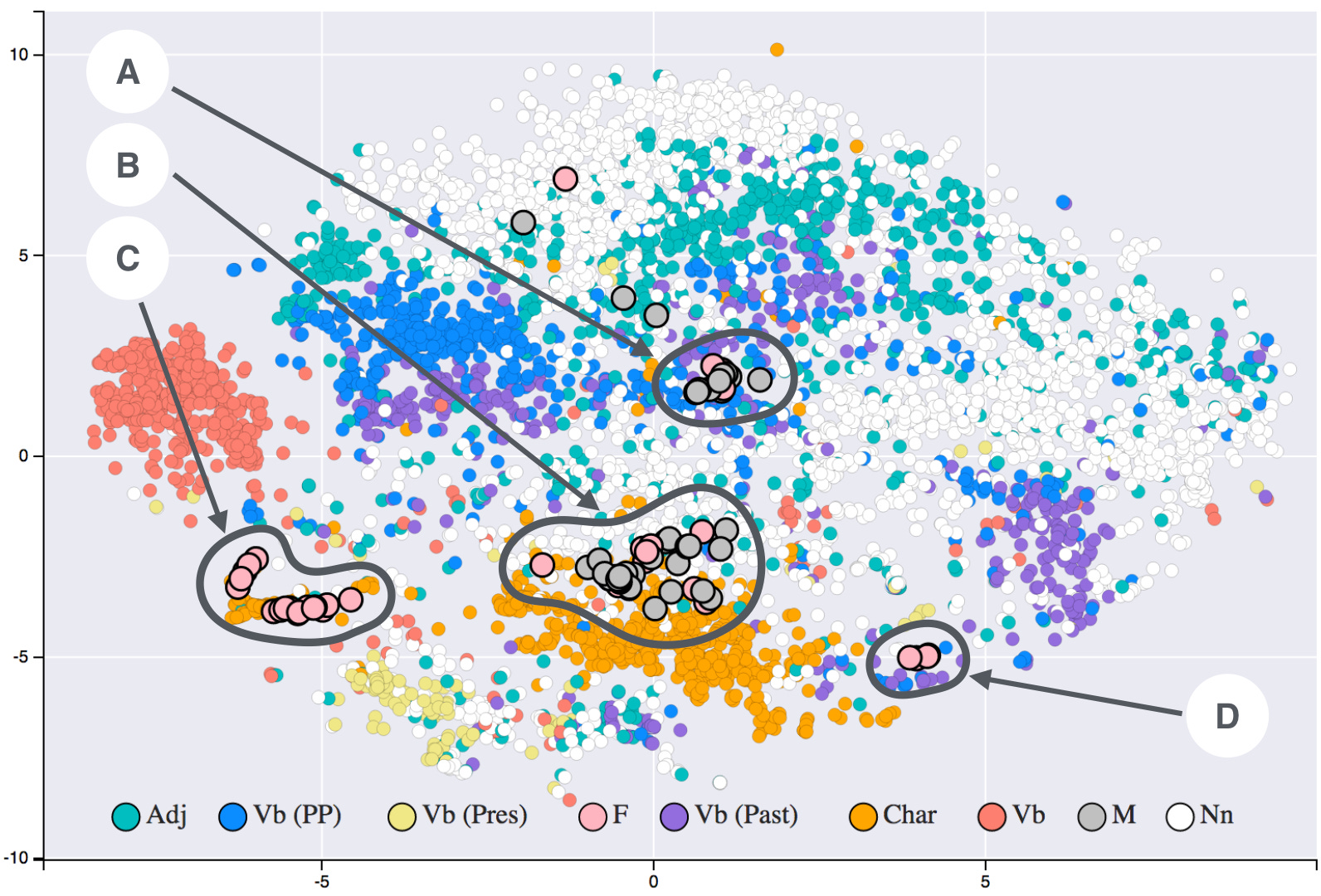
For Macro trends, a good latent representation algorithm can group/identify prominent patterns. For example, each datapoint (unsupervised) is a collection of features like location, time, pour-mix, machine spec.
Learn embeddings via Autoencoders to learn representation. Some pointers to prominent algorithms are Deep Emebedded Clustering (DEC), DeepCluster using pseudo labels.
For Micro trends, leverage the supervised data of successful/rejected datapoints to develop a predictive model which models
P(success|flavor)
You can also make this personalized by modeling a probabilistic quantity at a user group level.
P(success|flavor, consumer/country/time)
where, the score range between [0, 1] will indicate for a flavor mix to be successful in taste.
Few A/B tests to run:
Data accuracy: Leverage more visual clues to clean the data and train the models (e.g. incorporate facial expression or immediate action to tighten the labels)
Input data expansion: Ask the customers to rank flavors they tried, and invite voluntary surveys (without annoying or discouraging from future participation)
Of-the-shelf Embeddings and world knowledge as input in building Macro and Micro models (leverage LLMs to augment training data)
Leverage prior business info to warm-start models (as a company, some patterns and trends will be already known). Start the model to pre-train on that, and track effectiveness improvement.
Each of these tests should provide a read on how they can improve P(success|flavor) the offline metric. And, once there is conviction, a small batch can be floated for pilot test (often companies try limited edition flavors).
Career Shift:
As you can see, the clear shift from opinion oriented prediction of what customers would like to data-driven method of identifying successful flavor based on customer feedback. And one step further, to build a predictive power of what comes next in the journey of flavor.
Coke will employ many data scientists and ML engineers to influence the strategy and development of the product. With success, the investments may shift from operations to innovation.
I see few AI related jobs on Coke careers website (snapshot from 12/14/2025):
https://careers.coca-colacompany.com/job/22720989/cps-sg-ai-engineer-intern-singapore-sg/
https://careers.coca-colacompany.com/job/22710863/senior-manager-demand-planning-atlanta-ga/
I can also see they have a Head of Generative AI role with Global VP responsibility: Praik Takar
The So-what:
We are moving from “Mass Production” to “Mass Prediction.” The next product you buy won’t be created by a designer; it will be created by your usage data.
If AI creates the perfect flavor for you based on your data, does it matter that a human didn’t invent it? Would you drink an AI-generated soda flavor?”
Notable Other Use-Cases:
Predict the change in Coke taste based on the crop yield and weather changes and adjust the concentrates accordingly. No public artifact/footprint, perhaps too confidential or secret sauce to talk about.
Interestingly, term “Artificial Intelligence” was mentioned 7 times in the annual report of Coke and 11 times in Pepsi.
Coke using Azure AI for ML integration and workloads: https://www.microsoft.com/en/customers/story/22668-coca-cola-company-azure-ai-and-machine-learning
Coke’s marketing creatives for hyperlocal feel using Generative AI models: https://blogs.nvidia.com/blog/coca-cola-wpp-omniverse-generative-ai/
This article comes at the perfect time! I was just thinking about AI's potential. The idea of using it for taste discovery is so cool, realy like finding the perfect ending to a good book. So insightful!